
The machine failed. The tire came apart. The heater caught. Somewhere between that moment and the emergency room, somebody is going to suggest it was your fault. A San Angelo defective product lawyer exists to make sure the product gets examined before that story sticks.
Templeton Law Firm helps injured people in San Angelo, Tom Green County and across West Texas determine whether a product was genuinely defective, preserve the proof of it, and pursue the companies responsible. Scott Templeton has handled injury and insurance claims in this region since 1998. There is no attorney's fee unless the firm recovers for you.
Call 325-482-9120 before the product goes back to the seller.
How do you know if a product was actually defective?
A product is legally defective when it was unreasonably dangerous in one of three ways: it was built wrong, it was designed wrong, or it was sold without the warning that would have kept you safe. Ordinary wear, ordinary misuse and ordinary bad luck are not defects.
The honest answer in most cases is that nobody knows on day one. That is what the investigation is for. What matters immediately is that the physical product survives long enough to be examined.
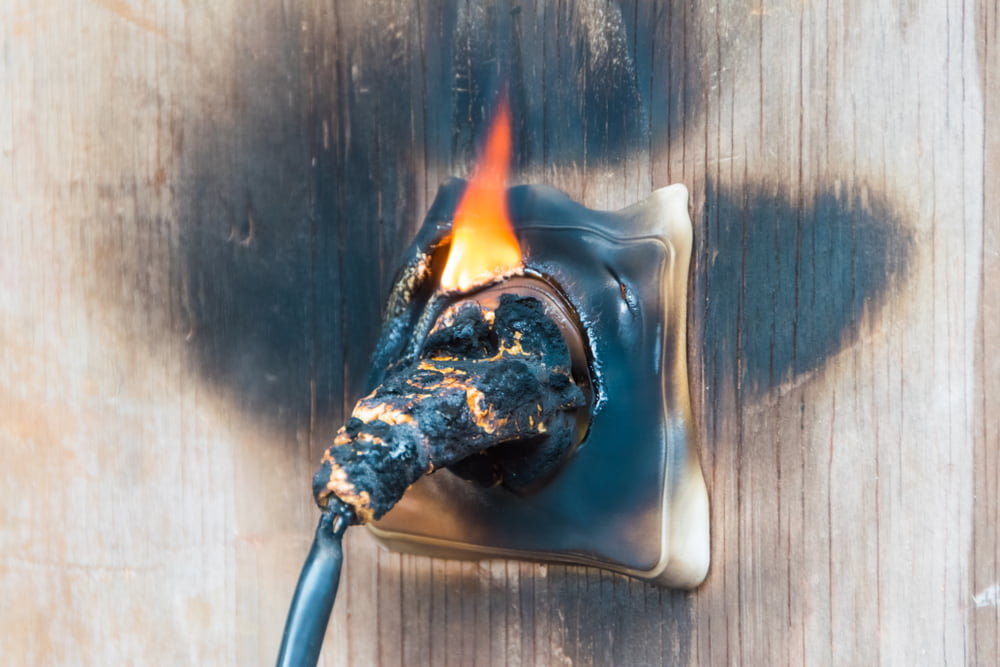
What are the three kinds of product defects in Texas?
Texas recognizes manufacturing defects, design defects and marketing defects. Which one applies changes the evidence entirely, so it is worth understanding the difference before anyone calls it an accident.
Manufacturing defect: the unit that came out wrong
A manufacturing defect means the product departed from its own specifications. The design was fine. This particular one was not.
Cracked welds, contaminated material, a missing fastener, a mis-torqued bolt, a bad batch of adhesive. The proof usually comes from comparing the failed item against an identical unit that left the same line.
Design defect: every one of them is dangerous
A design defect means the product was built exactly as intended, and the intention was unsafe. Every unit carries the same risk.
Texas makes this the hardest defect to prove, because the law requires showing a safer alternative design that was economically and technologically feasible when the product left the company's hands. That means an engineer has to demonstrate the better guard, interlock, material or geometry the company could have used.
Marketing defect: the warning nobody gave you
A marketing defect is a failure to warn or a failure to instruct. The product may be fine when used correctly, and dangerous in a foreseeable way the company never told anyone about.
These cases turn on what the company knew, when it knew it, and what the label actually said. Warnings buried on page 40 of a manual, printed in a size nobody reads, or placed where the user never looks all get scrutinized.
| Defect type | What went wrong | Typical proof |
| Manufacturing | One unit deviated from the design | The failed part compared to an exemplar |
| Design | The design itself is unsafe | Engineering testimony on a safer alternative |
| Marketing | The warning or instruction was inadequate | Labels, manuals, and the company's own hazard records |
Who can actually be sued once the defect is identified is covered on the firm's San Angelo product liability page, along with the filing deadlines that apply.
What should you do in the first 72 hours?
Keep the product, document everything, and get medical care on the record. Those three steps protect a claim better than anything a lawyer can do later.
Keep the item itself, along with the packaging, the manual, the receipt and any parts that broke off. Photograph the product from every angle before it is moved, and photograph the scene, the surroundings and the injuries.
Write down the model and serial number. Save the box. Get treatment the same day if possible, and tell the provider exactly what happened, because the medical record becomes the first written account of the event.
Do not talk to the manufacturer's claims representative before you have advice. That call is recorded, and it is not being made for your benefit.
Call 325-482-9120 and the firm will tell you what to hold onto.
Why you should not return or throw away the product
Because the object is the case. Send it back and the company controls the only physical proof of what failed.
Texas courts take the destruction or loss of key evidence seriously, and a judge can instruct a jury to assume missing evidence would have been unfavorable to the party who lost it. That rule cuts both ways, which is exactly why it is worth putting the manufacturer on written notice to preserve its own records, testing files and identical units before anything gets purged.
Store the item somewhere dry and secure. Do not attempt repairs. Do not let an insurance adjuster take it without a written agreement about testing and access.
Does a recall mean I automatically win my case?
No, and that surprises people. A recall is powerful evidence that a hazard exists, but it does not prove that this hazard injured this person on this day.
Causation still has to be established. The defense will argue the recalled condition was unrelated to your injury, or that you received notice of the recall and failed to act on it. A recall helps most when it documents the company's own knowledge of the risk.
Where do you check whether a product has been recalled?
Three federal agencies handle almost everything. Household goods, tools, appliances, furniture and children's products go through the U.S. Consumer Product Safety Commission recall database. Vehicles, tires, car seats and vehicle equipment go through NHTSA's recall lookup, which searches by vehicle identification number. Drugs, medical devices and food go through the FDA's recall listings.
If the product that hurt you has not been recalled, it can still be reported. The CPSC accepts consumer reports of unsafe products at SaferProducts.gov, and those reports become part of the public record other injured people can find.
What if there is no recall at all?
Most successful defect cases involve products that were never recalled. Recalls are often the result of litigation rather than the cause of it.
Absence of a recall simply means no agency has acted yet. It says nothing about whether the product was defective.
How does anyone prove a product was defective?
Through engineering, not argument. A credible defect case is built on physical examination and documents, and the work follows a predictable sequence.
A qualified engineer inspects and, where appropriate, tests the failed item. An exemplar, meaning an identical undamaged unit, gets purchased and compared. Failure analysis identifies the mechanism, whether that is fatigue, overload, thermal runaway, material defect or something else.
Then discovery opens the company's files. Prior incident reports, warranty claims, internal testing, design change history and complaints to regulators frequently show the manufacturer already knew. That is the evidence that moves cases.
Products that cause the most injuries in West Texas
The ones this region actually uses. San Angelo and the surrounding Concho Valley run on agriculture, oilfield services, construction and ranching, and the product failures here reflect that rather than national averages.
| Category | Typical failure | What gets examined |
| Oilfield equipment | Pressure vessels, valves, hoses, lifting gear | Pressure ratings, material certifications, maintenance history |
| Farm machinery | Balers, augers, PTO shafts, missing guards | Guarding design, shielding, operator warnings |
| ATVs and UTVs | Rollover, fuel system, steering failure | Rollover protection, center of gravity, recall history |
| Tires | Tread and belt separation at highway speed | Manufacture date, build records, prior claims |
| Gas appliances | Propane systems, water heaters, space heaters | Shutoff design, venting, installation instructions |
| Lithium-ion batteries | Thermal runaway in tools, chargers, e-bikes | Cell sourcing, charging circuit, certification marks |
Ladders, scaffolding, power tools, medical devices and implants round out the list.
Many of these failures happen on the job. When they do, there may be a claim against the equipment manufacturer that exists alongside any workplace accident claim in San Angelo, because the two run on separate legal tracks.
What the other side is doing while you recover
Working the file, quickly and professionally. Large manufacturers keep rapid response arrangements in place precisely for incidents like yours.
Within days of a serious injury, a manufacturer may dispatch its own engineer, request the product for testing, obtain the incident scene photographs, and take a recorded statement from anyone willing to give one. None of that is improper. It is simply one-sided if nobody is doing the same work on your behalf.
That is the practical argument for getting a lawyer involved early rather than after treatment ends. Evidence gets tested once. The party that controls how and when it is tested holds an advantage that is difficult to claw back later.
A balanced inspection, with your engineer present and the protocol agreed in advance, protects the integrity of the evidence for both sides.
Who pays for the engineering and testing?
The firm does, up front. Defect cases require experts, exemplar products and laboratory work before a single dollar is recovered, and expecting an injured family to fund that is not realistic.
Templeton Law Firm handles these cases on a contingency fee. Case expenses are advanced, and there is no attorney's fee unless a recovery is made.
Why West Texas families bring defect cases here
Because the lawyer you meet is the lawyer who works the file. Scott Templeton is a San Angelo native who earned his B.A. in English and History at Angelo State University and his Juris Doctor from St. Mary's University School of Law in San Antonio in 1998.
He has practiced in this region for more than 25 years, which matters in defect cases for a specific reason. Knowing how a baler, a pressure vessel or a rural gas system is actually used here makes it far harder for a manufacturer to sell a jury the argument that the operator must have been careless.
"I know the country and the people." In a case where an out-of-state corporation is betting that nobody local will push back, that is not a slogan. It is the difference between a claim that gets taken seriously and one that does not.
Defective product questions people ask
The product was modified after I bought it. Is the claim over?
Not necessarily. It depends on whether the modification caused the failure and whether the modification was something the manufacturer should have anticipated. Aftermarket parts and removed guards are common on West Texas equipment, and the defense raises them in nearly every case.
Can I bring a claim if I was the one operating it?
Yes. Using the product is not the same as misusing it, and Texas allows recovery as long as your own share of responsibility stays at or below half. The question is whether a reasonable person would have used it the same way.
What if the product only damaged property and nobody was hurt?
Texas product liability law covers property damage as well as personal injury. A defective water heater that floods a house or a failed component that destroys a piece of equipment can support a claim on its own.
The seller says the warranty expired. Does that end it?
No. A product liability claim is not a warranty claim. An expired warranty limits your right to a free repair. It does not release a manufacturer from responsibility for an unreasonably dangerous product.
Should I post about it on social media?
Hold off. Defense counsel reads public posts, and an offhand comment about how you were using the product can be quoted back to you years later. Document privately instead.
Get the product examined while it still exists
The window to preserve evidence is short, and it closes quietly. Once the item is returned, repaired or scrapped, the strongest case in the world becomes an argument between memories.
Templeton Law Firm is at 905 S. Abe Street in San Angelo, open Monday through Friday, 9 AM to 5 PM. Call 325-482-9120 or send the details through the contact page for a free review of what happened.